Farm and Ranch (Commercial Package)
Farm and ranch commercial package insurance for horse businesses: property, general liability and vehicle cover for barns, tack, equipment and trailers.
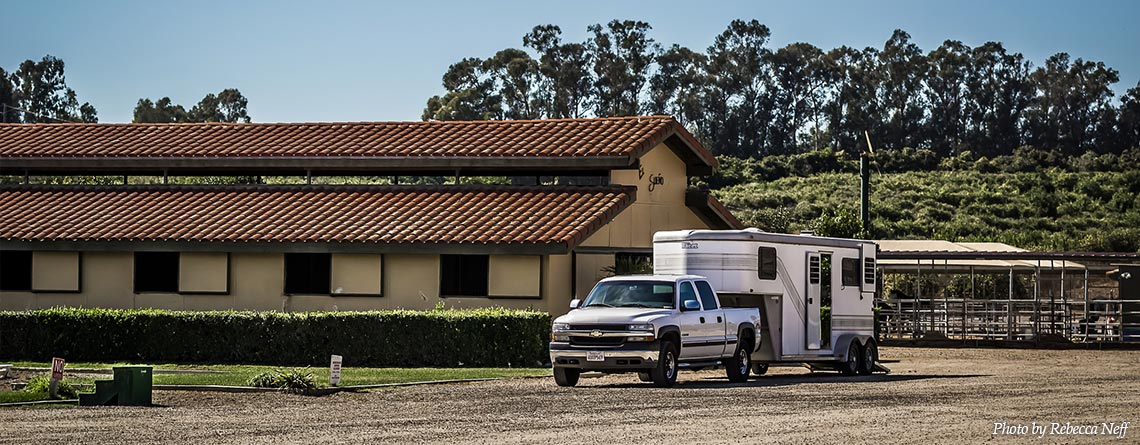
Most of the property and liability insurance coverage needed by professional horsemen may be included on a Commercial Package Policy.
Depending on the scope of business operations a Farm Owners or Special Multi-Peril Policy will provide adequate coverage. These policies are usually divided into three sections — Property, General Liability, and Vehicles.
Under the Property section, you may insure any type of business personal property, with the exception of livestock mortality insurance. Property for your personal use and enjoyment is covered under the dwelling portion of the policy. Categories of coverage may include a permanent residence, a seasonal dwelling, and additional living expense in the event that the home becomes uninhabitable due to loss caused by a covered peril.
Many high-value items can also be insured– for example: jewelry, furs, fine arts, and cameras.
Additional portions of the policy are available to provide coverage for permanent structures, which are used in connection with your horse business, such as stables, sheds, garages, employee dwellings and bullpens.
However, business property is not just buildings; you may also have a sizable investment in business personal property. With a blanket form, this type of business personal property may be covered for a single amount of insurance. The following items can be included: tack equipment, hay and grain, tractors and implements, irrigation pipe and pumps, farm tools and livestock on a named peril or all-risk basis. The maximum amount of recovery is $500 per animal.
The type and number of perils the property can be insured against is flexible in order to meet your individual needs. All Risk coverage, you are insured for any physical loss or damage, with the exception of a limited number of exclusions.
The general Liability section of the policy is capable of protecting you for your legal liability arising from both your personal activities and the operation of your horse business. Coverage is provided for losses, which occur away from the premises. Medical Payments coverage is included for individuals injured on your property, regardless of who is responsible for the accident.
In many cases a family horse business is covered only for liability losses as provided by the personal liability coverage of their Homeowner policy. This type of situation creates a serious gap of coverage, because losses arising from business pursuits are excluded on the homeowner policy. This leaves the insured with a potentially catastrophic liability loss to self-insure with his or her own assets.
You have the option of including motor vehicles as a separate section of your Commercial Package Policy. Here again, you are afforded the convenience and price competitiveness of providing coverage for personal and business use of limited to pickups, autos, horse trailers and tractor trucks.
Any unlicensed motorized vehicle, for example, quads, golf carts, etc., should be specially described for physical damage and to include liability off the premises (like horseshows).
You can save money and eliminate gaps or overlaps in coverage by making the property and liability package concept work for your horse business.
Who a Farm and Ranch Package Is Written For
A Farm and Ranch Commercial Package is the policy that covers the place your horses live and the business you run from it. Where equine mortality insurance protects the animal, this policy protects the property, the liability and the vehicles that sit around the animal. It is built for professional horsemen and for horse owners whose property has outgrown what a standard homeowner policy was designed to handle: a working barn, a string of client horses, employees on the payroll, tractors in the shed and trailers in the yard.
The structure is deliberately modular. Depending on the scope of your operation, a Farm Owners policy or a Special Multi-Peril policy will provide the right base, and from there the sections are assembled to match what you actually do. Getting that assembly right is where the value lies — a well-built package eliminates both the gaps that leave you exposed and the overlaps you are paying for twice.
The Homeowner Policy Gap
The most expensive mistake in this part of the market is assuming a homeowner policy will stretch to cover a horse business. It will not. Losses arising from business pursuits are excluded on a homeowner policy, which means a family horse operation relying on personal liability cover may be self-insuring a potentially catastrophic liability loss with its own assets.
A Farm Owners policy usually provides the same protections a homeowner policy does, and there are generally discounts available when the home is packaged together with the liability. The second benefit is less obvious but often more valuable at claim time: your personal and commercial liability sit on the same policy with the same company. Consider a friend who comes over for dinner and asks to see the horses. You walk out to the barn, your friend offers a horse a carrot and is bitten. Is that a personal liability claim under the homeowner policy, or a commercial liability claim under the farm policy? With two separate carriers, that question can become an argument. With one policy, it does not.
Getting the Property Schedule Right
The property section is where most under-insurance hides, because equine businesses accumulate value gradually. A useful exercise is to walk the property and list what would actually need replacing after a serious fire or storm:
- Permanent structures used in connection with the horse business — stables, sheds, garages, employee dwellings and bullpens.
- The residence itself, along with any seasonal dwelling, and additional living expense if the home becomes uninhabitable after a covered loss.
- Business personal property, which can be written on a blanket form for a single amount of insurance: tack and equipment, hay and grain, tractors and implements, irrigation pipe and pumps, farm tools, and livestock on a named peril or all-risk basis, with recovery on livestock limited to $500 per animal.
- High-value personal items such as jewellery, furs, fine arts and cameras, which can be scheduled separately.
The range of perils you insure against is flexible so that the policy can be matched to your individual needs and budget. All Risk coverage insures you for any physical loss or damage apart from a limited number of exclusions, and is generally the cleaner option where the values involved are significant. Note that livestock mortality insurance cannot be written under the property section — horses are insured for death under a separate equine mortality policy, and the $500 per animal figure under the farm policy is not a substitute for it.
Liability, Vehicles and the Exposures People Forget
The general liability section protects you for legal liability arising from both your personal activities and the operation of your horse business, including losses that occur away from the premises. Medical Payments coverage is included for individuals injured on your property regardless of who was at fault, which often resolves a minor incident before it becomes a claim against your liability limits.
Motor vehicles can be included as a separate section of the Commercial Package, covering personal and business use of pickups, autos, horse trailers and tractor trucks at package pricing. Unlicensed motorised vehicles — quads, utility vehicles, golf carts — need to be specifically described, both for physical damage and so that liability extends off the premises, which matters as soon as that vehicle is loaded and taken to a horse show.
Three exposures are worth raising with your agent directly, because they are commonly missed. If you provide riding instruction on the farm, that instruction exposure must be listed on your policy. If you board or train horses you do not own, the farm policy does not answer for them — that requires Care, Custody & Control coverage. And if anyone works on the property, including a boarder trading labour for part of their stall rent, you are into Workers’ Compensation territory: the trade has a value, counts as remuneration and should be declared on your payroll reports.
What You Will Need to Get a Quote
Farm policies are quoted from detail, so gathering the information before you start makes the process considerably faster. Expect to provide a list of dwellings, barns and other structures, including type of construction, age of each building, square footage, and the type and age of the roof. You will also need a list of tractors, tack, tools and other equipment — year, make, model and serial numbers for equipment, though those are usually not required simply to obtain a quote. Liability information is submitted alongside the property schedule: the number of horses in each category of exposure, the number of students, and the receipts generated by each activity.
The rule that governs all of it is simple and worth repeating: if it is not listed on the policy, it is not covered. Reviewing the schedule annually, particularly after you have built, bought or expanded, is the cheapest insurance work you will ever do.
Build a Package Around Your Operation
By making the property and liability package concept work for your horse business, you can save money and eliminate gaps or overlaps in coverage at the same time. Equine Insurance, a division of Parker General Insurance, has spent over 40 years assembling farm and equine programmes across the Western United States, and our agents know which carriers will write which exposures.
To begin, request a free quote or complete the Farm Owners / Stable Liability questionnaire on our quote page. You can also review our full range of equine and farm policies or read the frequently asked questions for more detail on how these coverages fit together.
Ready to talk about cover?
Request a free quote and one of our agents will come back to you directly.